
Planning methods
How to Plan a Trip With Friends Everyone Can Enjoy
The group chat is enthusiastic. Someone sends a villa, someone else sends a flight, and suddenly there are twelve suggestions but no trip. What usually helps is a short agreement about the decisions that matter before you collect another hundred places.
By the Huvver team · Reviewed October 23, 2026
The short answer
Start with dates, a comfortable spending range, sleeping arrangements, and the pace people want. Choose one person to coordinate bookings, give decisions a deadline, and build a shared day plan with room to split up. Decide how shared expenses will work before anyone pays a deposit.
Have the useful conversation before choosing the destination
Ask everyone four things privately or in a short form: which dates work, what they are comfortable spending, what they most want from the trip, and what would make it difficult. “A relaxed beach week” and “a new activity every morning” can both sound like a holiday until they appear on the same calendar. Find that difference early.
Be specific about what the spending range includes. Flights, accommodation, meals, activities, and local transport are different commitments. Someone who can afford the hotel may still feel squeezed by a string of prepaid tours. Give people a way to say a plan is too expensive without asking them to explain their finances to the whole group.
Give each decision an owner and a deadline
One coordinator can keep the trip moving while other people research meals, transport, or activities. The coordinator needs a clear agreement about what they may book. A useful message is: “These are the two lodging options, this is the full price and cancellation deadline, and I need your choice by Thursday.” Silence should prompt a follow-up before money is committed.
Keep tentative ideas separate from confirmed purchases. A link in the chat might mean “this looks fun,” “I am checking the dates,” or “I already bought it.” Label the status in the shared plan, record who booked, and put the supplier’s confirmation somewhere the travelers who need it can reach.
| Decision | Example agreement |
|---|---|
| Shared time | Breakfast and the main outing together; afternoons can split. |
| Accommodation | Confirm beds, room sharing, full price, and cancellation terms before paying. |
| Bookings | One coordinator books after each traveler explicitly approves their share. |
| Money | Record actual shared expenses daily; exclude personal purchases. |

Build a day people can actually follow
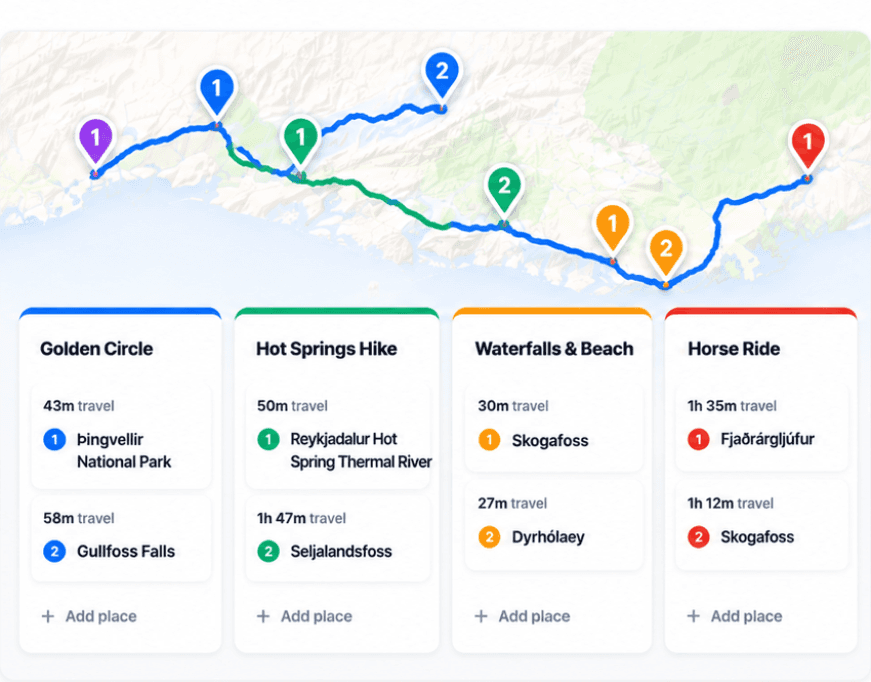
Start with the overnight base and one main activity. Add the travel between stops, meals, and a reasonable place to meet again. A group has more coordination than a solo traveler: someone needs coffee, someone is collecting bags, and someone has the ticket email. Leave enough room that a small delay does not become a negotiation.
Check the exact date on the venue’s own website before committing the group. A good example is the Louvre, whose official visitor page lists Tuesday closure and recommends time-slot bookings. A generic “Paris museum morning” still needs that calendar check. Apply the same habit to restaurants, boats, and guided visits.[1]
Make splitting up easy
Agree that joining the trip does not require joining every activity. Put the optional visit beside a slower alternative and agree on a meeting place. “Meet at the hotel entrance at six” is easier to follow than “we will find each other after the museum.” Keep the arrangement visible for anyone whose phone is temporarily offline.
If part of the group leaves on a hike or another outdoor activity, share the specific route and return arrangement with the appropriate contact. The National Park Service recommends leaving an outdoor trip plan with someone who is not going along. A group holiday itinerary can supply context, but the activity needs its own useful details.[2]
Agree how money will work
Choose whether each purchase is shared per person, per room, or per household. Those rules can differ between bills. Two people sharing a room may pay one lodging share while each owes a full meal share. Record the payer and participants when the receipt arrives, while everyone remembers what happened.
Huvver supports actual shared and private costs, traveler splits, and paying groups for people who settle together. It also lets an owner invite editors and viewers. The owner needs an annual subscription; invited collaborators can join free. Keep the group’s future spending agreement in notes or another document, since Huvver’s planning-budget controls are currently unavailable.[3][4][5]
Do one review together before departure
Walk through arrival, the busiest day, and departure. Make sure everyone knows the overnight addresses, booked activities, who holds the tickets, and which costs are still due. Invite corrections now. A traveler who discovers a room-sharing assumption at check-in has much less room to fix it.
During the trip, keep updates short and put the change into the shared itinerary. The group chat can carry the message; the plan should show the decision. That small habit saves everyone from searching a week of conversation to find tomorrow’s departure time.
Explore a real trip
See day-by-day routes with maps, notes, and editable Huvver templates.
Sources and review notes
Outside product details are linked to first-party pages. Advice and recommendations are Huvver’s editorial judgment; this article does not imply hands-on testing unless it says so.