
Planning methods
How to Plan a Europe Train Trip, One Connection at a Time
Europe looks wonderfully compact on a rail map. The detail that makes a trip work is the connection: which station, which train, what kind of ticket, and enough time to get from your room to your seat. Work through those details once and the route becomes much easier to enjoy.
By the Huvver team · Reviewed October 23, 2026
The short answer
Choose your overnight bases, check every connection for the exact travel date, and record the departure and arrival stations. Understand which tickets or passes cover the journey and whether seats need a separate reservation. Allow time for station access, required checks, changes, luggage, and reaching the next lodging.
Choose the route before choosing a pass
Write the rail journeys you expect to take, including airport connections and any day trips. Then check the operator’s timetable. A line on a map is a useful starting point, but it does not tell you whether your preferred train is direct, how often it runs, or whether a connection works on a Sunday.
Compare the actual ticket options for those journeys with any pass you are considering. Include the reservations, flexibility, and services you need. There is no reliable shortcut that makes a pass the cheapest choice for every traveler. The route gives you a specific set of journeys to price instead of a vague promise of unlimited possibility.
Save the exact station names
A city name is too broad for a transfer plan. Record the stations from the booking, then check how you reach them from your lodging. If a connection changes stations, include the local journey and any ticket you need for it. Make sure a companion can identify the same departure point without asking whoever researched the route.
Think about the arrival too. Reaching a city at noon may still leave a local train, a walk with luggage, and a bag-drop arrangement before lunch. Put those steps beside the rail leg so the rest of the day has a realistic starting point.
Check the ticket and the seat separately
Train access and a reserved seat can be separate purchases. Deutsche Bahn, for example, has a reservation-only process for travelers who already have a ticket. Read the conditions for the specific service and fare. If you have a pass, check the current reservation requirements rather than assuming the pass alone completes every booking.[1]
Keep the travel date, train number, coach, and seat with the relevant day once confirmed. If you change a service, check what happens to both the ticket or pass and the reservation. Ask the seller to confirm any unclear conditions before relying on a replacement train.
Use the operator’s arrival guidance
The right pre-departure allowance depends on the route. Eurostar tells passengers traveling to or from London to follow the recommended station-arrival time on their ticket because ticket, security, and border steps happen before boarding. Its continental routes have different guidance. Check your ticket and the current operator instructions rather than borrowing a timing rule from a different service.[2]
For changes along the way, look at how many platforms, lifts, stairs, or local transfers your group must manage. A technically offered connection may feel demanding with large bags or mobility needs. Where the booking system supports it, look for a longer interchange or ask the operator about assistance before purchasing.
Keep transfer days lighter
A rail journey can be a lovely part of the trip. Let it occupy the day honestly. Put one flexible activity near the arrival base and leave enough time to eat. A nonrefundable attraction booking immediately after a connection makes the entire day depend on every earlier step working as expected.
Recheck the timetable near departure. SBB’s help explains that engineering works and disruptions can change connections, including changes incorporated after the original timetable appeared. Save the relevant journey in the operator’s app if you want its available alerts, and keep important tickets accessible in the format the operator accepts.[3]
Keep the day plan beside the confirmed rail details
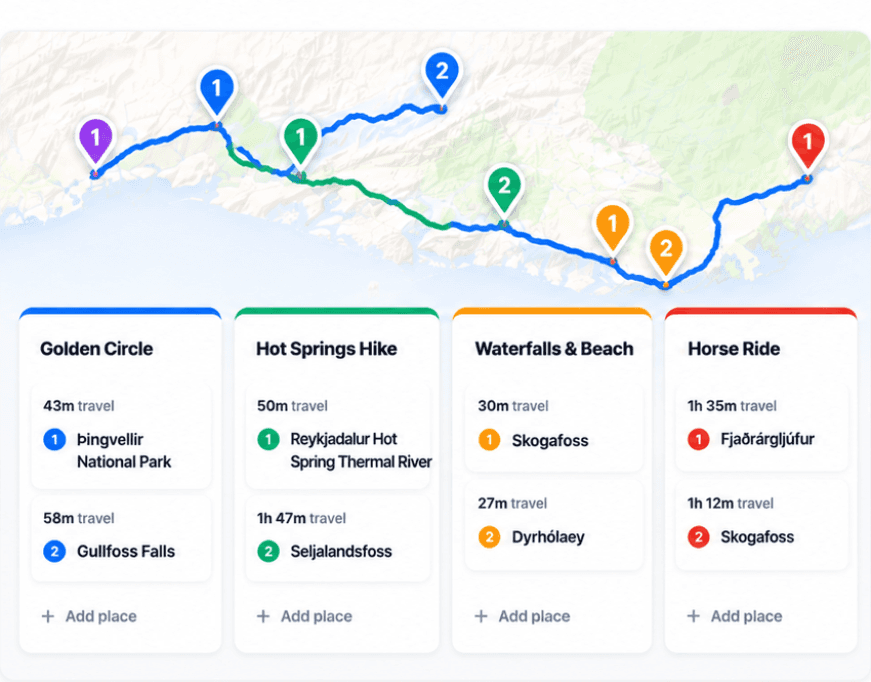
Huvver can show transit legs between stops, with notes, links, overnight stays, and a custom duration. Those legs are planning entries; they do not supply a live train timetable or reserve a seat. Use the operator for confirmed service information and keep the result beside the activities it affects.[4]
For an inspectable starting route, Huvver has Italy and Switzerland rail guides. Public previews are free to read, while an editable copy requires an annual owner subscription. Whether you use a template or build from scratch, check one complete transfer day before purchasing the whole route.[5][6][7]
Explore a real trip
See day-by-day routes with maps, notes, and editable Huvver templates.
Sources and review notes
Outside product details are linked to first-party pages. Advice and recommendations are Huvver’s editorial judgment; this article does not imply hands-on testing unless it says so.